
Buying land or property is a major decision. Before paying an advance or proceeding toward registration, you should carefully verify the documents connected to the property and the person selling it.
In Karnataka, buyers may come across documents such as the Sale Deed, RTC/Pahani, Mutation records, Encumbrance Certificate, survey records and land conversion documents. The exact documents you need to check depend on the type of property and its ownership history.
The important part is not simply collecting documents. You should compare the information across different records and investigate anything that does not match.
What documents should you check before buying property?
Before buying land or property, check the relevant:
Sale Deed and ownership documents
Previous ownership or parent documents
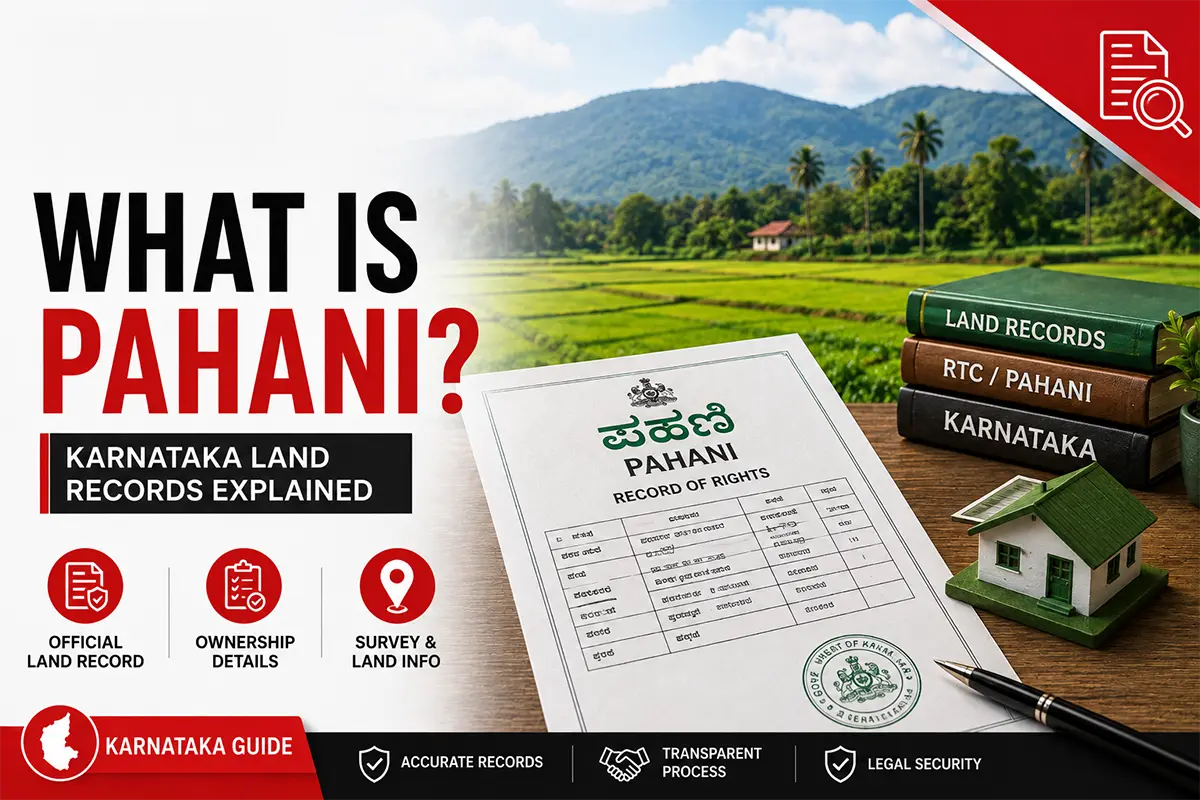
RTC/Pahani
Mutation records
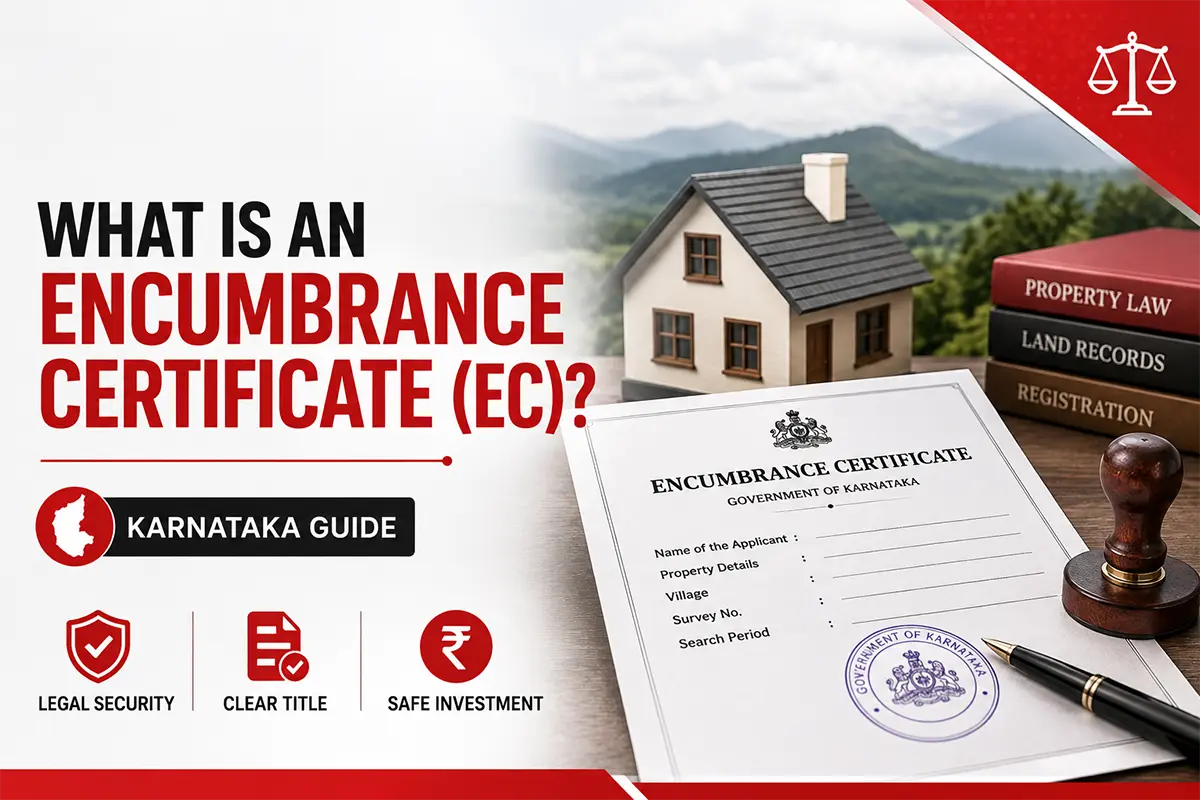
Encumbrance Certificate (EC)
Survey Number and Hissa details
Land-use or conversion records, where applicable
Property tax and Khata records, where applicable
Layout and approval documents, where applicable
Seller identity and authority documents
Mortgage or loan-related documents, where applicable
The exact checklist will vary depending on whether you are buying agricultural land, a residential site, a house with land, inherited property or another type of property.
1. Check the Sale Deed
The Sale Deed is one of the most important documents to examine when purchasing property.
It records the sale transaction and identifies the property being transferred. Under Section 54 of the Transfer of Property Act, 1882, a sale is a transfer of ownership in exchange for a price, with the transfer of qualifying tangible immovable property taking place through a registered instrument.
When checking the Sale Deed, compare:
Seller's name
Buyer's name
Survey Number
Hissa or subdivision details, where applicable
Extent or area
Property description
Boundaries
Registration details
References to previous ownership documents
The property description should allow the property to be properly identified.
If the information in the Sale Deed does not match other property records, find out why before proceeding.
2. Check Previous Ownership Documents
Do not look only at the seller's latest Sale Deed.
You should also understand how the seller acquired the property.
Previous documents may include:
Earlier Sale Deeds
Gift Deeds
Partition Deeds
Release Deeds
Settlement documents
Inheritance-related documents
Court orders, where applicable
These documents help establish the property's ownership history.
Why is the ownership chain important?
Imagine the ownership history as:
Previous Owner → Sale Deed → Current Owner
If the seller inherited the property, the chain may look different:
Previous Owner → Inheritance → Legal heirs → Current Owner
The exact documents required depend on the circumstances.
If there are unexplained gaps in the ownership history, get them investigated before making a commitment.
3. Check RTC / Pahani
RTC and Pahani are commonly encountered in Karnataka land records.
The RTC is a revenue record containing information associated with a parcel of agricultural land. Karnataka's Bhoomi system is used for managing land records and related services.
When checking RTC/Pahani, compare relevant information such as:
Owner name
Survey Number
Hissa or subdivision
Extent
Land-related details recorded in the document
Do not examine the RTC in isolation.
Compare it with the Sale Deed and other relevant records.
Example
Suppose the Sale Deed refers to Survey Number 125/3 but another record refers to Survey Number 125/4.
Do not assume they are the same property.
The difference may have an explanation, such as subdivision or another change in the land records, but it should be verified.
4. Check Mutation Records
Mutation records show changes made in the relevant land revenue records following transactions or other changes.
Karnataka's Bhoomi system supports mutation-related land-record processes.
When checking mutation records, look for:
Relevant owner names
Survey details
Mutation reference or details
Whether the relevant transaction is reflected
Whether the current revenue records are consistent with the ownership documents
Mutation is an important part of the document-checking process, but it should not be treated as a replacement for examining the underlying ownership documents.
5. Check the Encumbrance Certificate
An Encumbrance Certificate, commonly called an EC, is an important registration-related document that buyers often check before purchasing property.
It can help identify registered transactions and encumbrances recorded for the property during the period covered by the search.
When reviewing an EC, check:
The period covered
Property identification details
Registered transactions
Mortgage or other relevant entries, where recorded
Whether the transactions shown are consistent with the ownership history
Check the EC period
An EC relates to the period for which the search has been conducted.
Therefore, do not simply ask whether an EC is available.
Check what period the EC covers and whether that period is appropriate for understanding the property's transaction history.
Is a clean EC enough?
No.
An EC is one part of property due diligence. It should not be treated as a guarantee that every possible title issue, dispute or claim has been eliminated.
The EC should be considered together with the Sale Deed, previous ownership documents, revenue records and other relevant documents.
6. Verify the Survey Number and Hissa Details
The Survey Number is one of the key identifiers used when dealing with land.
Depending on the property, you may also encounter:
Hissa Number
Subdivision details
Survey sketches
Other survey-related records
Compare these identifiers across the relevant documents.
Check for consistency
Look at:
Survey Number
Hissa or subdivision
Extent
Property description
Boundaries
A mismatch does not automatically mean there is a problem, but it should be explained and verified.
7. Check the Extent and Boundaries
The documents should provide enough information to identify the property.
Compare the recorded extent and boundaries with the property you are actually being shown.
Check whether:
The stated area appears consistent
The boundaries correspond
The property location matches the documents
The physical property appears to correspond with the recorded property
If the property on the ground does not appear to match the documents, do not ignore the difference.
A survey professional may be useful where the physical boundaries or measurements require technical verification.
8. Check Land Use and Conversion Records
Land-use status is particularly important if you are buying land with plans to construct a house or use the property for a particular purpose.
Depending on the property and proposed use, conversion or other land-use requirements may apply.
Before proceeding, check:
The recorded land status
Whether conversion is relevant
Whether supporting conversion records exist, where applicable
Whether additional approvals are required for the intended use
Karnataka's land-revenue framework includes provisions relating to agricultural land conversion and has been amended over time.
Because rules can change, do not rely on an old general statement about agricultural land or conversion. Check the current requirements applicable to the specific property.
9. Check Property Tax and Khata Records Where Applicable
For properties covered by local property records, check the relevant tax and Khata records.
Depending on the property and jurisdiction, this may help you compare:
Owner name
Property identification
Tax records
Local property records
Remember that a tax receipt or Khata record should not be treated as a substitute for title verification.
These records are part of the wider due-diligence process.
10. Verify the Seller's Identity and Authority
Before buying property, confirm who actually owns the property and who has the authority to sell it.
The person negotiating with you may be:
The sole owner
One of several owners
An authorised representative
A person acting through a Power of Attorney
A legal heir
A representative of a company or other entity
If there are multiple owners
Find out who owns the property and what interests or shares each person has.
Do not assume that one person can automatically sell the entire property.
If the property is inherited
Ask for the relevant inheritance and ownership documents.
You need to understand how ownership passed to the current seller.
If someone is acting through Power of Attorney
Check the authority carefully.
The existence of a Power of Attorney document by itself should not be treated as proof that every aspect of the proposed sale is valid.
11. Check for Mortgages and Previous Loans
If the property has been used as security for a loan, examine the relevant records carefully.
If a mortgage or other registered transaction appears in the available records, ask for the supporting documents showing how the matter was resolved, where applicable.
Do not rely only on a verbal statement that the loan has already been cleared.
Ask for appropriate supporting documentation.
The exact documents required can depend on the lender and transaction.
12. Check Documents Based on the Property Type
Different properties can require different checks.
Agricultural land
Depending on the circumstances, check:
RTC/Pahani
Mutation records
Survey details
Ownership documents
EC
Land-use or conversion records, where applicable
Any applicable restrictions or special legal issues
Agricultural-land transactions require particular care because the applicable legal position can depend on the property's circumstances and current law.
Residential site or plot
Check:
Sale Deed
Previous ownership documents
RTC/revenue records, where applicable
Mutation
EC
Survey details
Layout approvals, where applicable
Conversion or land-use records, where applicable
House with land
You may need to examine both land-related records and building/property records.
Verifying ownership of the land does not automatically verify every aspect of the building.
Inherited property
Pay particular attention to:
Inheritance documents
Ownership shares
Legal-heir documentation, where relevant
Partition or release documents, where relevant
Current revenue records
Registration records
13. Cross-Check the Documents
This is one of the most important steps in the entire process.
Do not simply ask:
"Do I have all the documents?"
Ask:
"Do the documents tell the same story?"
Use this process:
Step 1: Identify the seller
Confirm who claims ownership.
Step 2: Check how the seller acquired the property
Review the current ownership document and relevant previous documents.
Step 3: Check the revenue records
Compare the seller and property details with RTC/Pahani and mutation records where applicable.
Step 4: Check registration records
Review the EC and relevant registered transactions.
Step 5: Compare property identifiers
Compare:
Survey Number
Hissa or subdivision
Extent
Boundaries
Property description
Step 6: Check land-use status
Determine whether conversion or other land-use requirements apply.
Step 7: Inspect the property
Check whether the property being shown to you corresponds with the documents.
Step 8: Investigate every unexplained mismatch
Do not proceed simply because the seller says a discrepancy is "just a small mistake."
Find out what caused it and obtain appropriate supporting records.
14. Red Flags to Investigate
A discrepancy does not automatically mean that a property is fraudulent.
However, unexplained problems should not be ignored.
Watch for:
Seller's name does not match relevant records
Survey Number differs between documents
Hissa details are unclear
Extent differs without explanation
Missing ownership documents
Gaps in the ownership chain
Mortgage-related entries without supporting closure or release documents
Seller refuses to provide relevant documents
Only photocopies or screenshots are provided
Physical property does not appear to match the records
Land-use or conversion status is unclear where applicable
Multiple owners are involved but only one person is negotiating
A representative cannot establish satisfactory authority to act
If something does not match, investigate it before proceeding.
15. Should You Hire a Property Lawyer?
Document collection and title verification are not the same thing.
A property lawyer can examine the documents as a connected ownership history rather than simply checking whether individual documents exist.
Professional legal review is particularly useful when:
The ownership history is complicated
The property has changed hands multiple times
The property is inherited
Multiple owners are involved
A Power of Attorney is involved
A mortgage or previous charge appears
Survey or extent details are inconsistent
There are disputes or notices
Conversion or land-use issues are unclear
For a specific property transaction, legal advice should be based on the actual documents and circumstances.
16. What to Check Before Paying an Advance
Before paying a substantial advance for land or property, start verifying:
Seller identity
Ownership document
Previous ownership documents
RTC/Pahani, where applicable
Mutation records, where applicable
EC
Survey Number
Hissa or subdivision, where applicable
Extent
Boundaries
Land-use status
Conversion records, where applicable
Property tax and Khata records, where applicable
Mortgage-related records, where applicable
Co-owner or representative authority
Physical property details
If an important document is missing, ask why.
If an important detail does not match, find out why.
Do not allow pressure to pay an advance to replace proper due diligence.
Property Document Checklist
Document / Check | What to verify |
|---|---|
Seller identity | Does the seller match the relevant ownership records? |
Sale Deed | Does it identify the property and transaction correctly? |
Previous documents | Is the ownership chain understandable? |
RTC/Pahani | Do the owner and land details match? |
Mutation | Are relevant changes reflected? |
EC | What registered transactions appear for the searched period? |
Survey Number | Does it match across relevant records? |
Hissa/subdivision | Does it match where applicable? |
Extent | Does the recorded area correspond? |
Boundaries | Do the records correspond with the property on the ground? |
Land use | Is the recorded/proposed use appropriate? |
Conversion | Is conversion relevant and documented where applicable? |
Tax/Khata | Are applicable local records consistent? |
Mortgage | Are relevant entries properly resolved? |
Multiple owners | Have all relevant ownership interests been considered? |
Power of Attorney | Is the representative's authority properly documented? |
Physical inspection | Does the property correspond with the documents? |
This checklist is a starting point for due diligence and is not a substitute for professional legal verification.
Frequently Asked Questions
What documents should I check before buying land?
Check the relevant ownership and title documents, previous ownership records, RTC/Pahani, mutation records, EC, survey details and applicable land-use, conversion, tax or approval records. The exact documents depend on the property and its history.
Is RTC the same as a Sale Deed?
No.
A Sale Deed is a registered instrument used for a sale transaction, while RTC is a revenue record associated with land records in Karnataka. They serve different purposes and should be compared during due diligence.
Is Pahani the same as RTC?
RTC and Pahani are commonly used together in Karnataka land-record terminology. Buyers should check the actual current record and official terminology applicable to the particular property.
Is a clean EC enough to buy property?
No.
An EC is one part of due diligence. It should be checked alongside the ownership documents, revenue records, property identifiers and other relevant records.
How do I verify the seller's ownership?
Start with the document through which the seller acquired the property and examine the relevant ownership history. Compare the seller's details with the applicable revenue and registration records.
For complicated ownership histories, professional title verification is advisable.
What if the Survey Number is different in two documents?
Do not ignore the difference.
Find out whether it relates to subdivision, correction, a different property reference or another legitimate reason. Obtain supporting records before proceeding.
Should I check documents before paying an advance?
Yes.
You should begin document and ownership verification before committing a substantial advance. The exact checks will depend on the property and transaction.
Do I need a property lawyer?
It depends on the complexity of the transaction, but professional legal review is particularly useful where there are complicated ownership histories, inheritance, multiple owners, mortgages, Power of Attorney, survey discrepancies, conversion issues or other title concerns.
Where can I check Karnataka land records?
Karnataka's Bhoomi system is the state's land-record management system and supports land-record and mutation-related services.
Where can I check registration-related records and EC?
Karnataka's registration system provides registration-related services, including Encumbrance Certificate services. Buyers should use the current official government portal or the appropriate registering authority for the transaction.
Final Takeaway
Buying property safely is not about collecting as many documents as possible.
It is about understanding what each document tells you and checking whether the information is consistent across the records.
Start with the seller's ownership document. Trace the relevant ownership history. Check RTC/Pahani and mutation records where applicable. Review the EC. Verify the Survey Number, Hissa, extent and boundaries. Check land-use and conversion records where relevant. Then investigate anything that does not match.
For complicated transactions, professional legal title verification can provide an additional level of protection.
If you are researching property in Sagara, you can also use this guide alongside the Sagara-specific land and property guides on Malnad Realty Guide.
Important Note
This article is for general educational purposes and is not legal advice. Property documentation requirements can vary according to the property type, ownership history, location, transaction and applicable law. Government rules and processes can change, so buyers should verify current requirements with the relevant authority and obtain professional legal advice for a specific transaction.